There’s a moment that happens in the kitchen — not every time, but often enough that you start planning around it. Someone’s stirring something, someone else is pouring wine, and without it being anyone’s idea, you’re actually talking. Not logistics. Not scheduling. Actually talking. Cooking together as a couple is one of the most underrated relationship rituals most people already have access to and aren’t using intentionally.
This guide is part of our complete resource on romantic dinner ideas for two at home. If you want the full planning system including timing, conversation, and atmosphere, that’s where to start. If you want to understand why cooking together works — and how to do it in a way that actually connects rather than stresses — you’re in the right place.
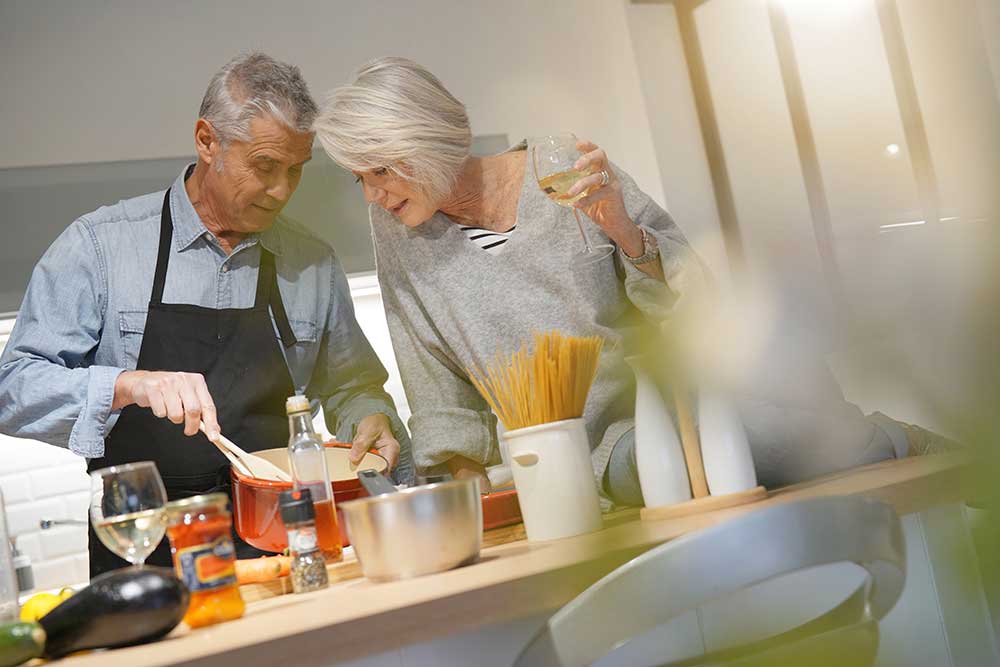
The kitchen is the most underused room in your relationship.
Table of Contents
- Why Cooking Together Actually Works
- What Research Says About Couples Who Cook Together
- How to Make Cooking Together Feel Romantic, Not Like a Chore
- How to Divide Kitchen Tasks Without Conflict
- What to Cook Together for Date Night
- Building a Regular Cooking-Together Ritual
- Common Mistakes That Kill the Mood
- FAQ
Why Cooking Together Actually Works
Most couples looking for ways to connect think about big gestures — trips, experiences, surprises. The research points somewhere more modest and more consistent: shared activity. Not just being in the same room. Not parallel scrolling on separate devices. Actually doing something together, with a shared goal and a tangible result.
Cooking is almost uniquely suited for this. Unlike watching something, it requires you to interact — to hand off things, coordinate timing, make small decisions together. Unlike many activities, it has a clear beginning, middle, and satisfying end. And unlike most experiences you could buy, it happens in your home on a random Tuesday at no additional cost.
The core mechanism: Cooking together creates what psychologists call “coordinated action” — synchronized activity that produces mild positive affect and feelings of closeness between participants. You’re not just cooking. You’re building a brief shared world with its own small language: who handles the garlic, whether the sauce needs more time, when to start the pasta water. That language is intimacy in its most accessible form.
There’s also the element of productive tension. Cooking has stakes — something could burn, something could be underseasoned, the timing could collapse. Low-stakes problem-solving together, over something as forgiving as pasta, is one of the gentlest ways to practice being a team. See our date night success guide for how to build this kind of intentional presence into the full evening.
What Research Says About Couples Who Cook Together
The case for cooking together is not just intuitive — it has a reasonable research foundation, even if the specific studies vary in scope and methodology. The consistent finding across relationship research is this: couples who engage in novel and challenging activities together report higher relationship satisfaction than those who simply spend passive time together.
What the evidence points to:
- Shared meals strengthen bonds — anthropologists and psychologists consistently note that eating together (especially food you prepared) activates communal feelings more reliably than other shared activities.
- Coordinated activity increases felt closeness — studies on synchrony show that doing things together with shared rhythm and timing creates mild feelings of affiliation and positive emotion.
- Novelty refreshes attraction — trying a new recipe or technique together introduces the kind of mild challenge associated with early relationship excitement, which familiarity gradually erodes.
- Physical proximity without agenda — the kitchen creates closeness without the pressure of a formal conversation. People often open up more easily when their hands are busy and their eyes have somewhere else to look.
None of this requires believing in any particular theory. The simpler version: couples who do things together stay closer than couples who sit near each other doing separate things. Cooking is one of the most accessible shared activities that produces a tangible, enjoyable result for both people at the end.
How to Make Cooking Together Feel Romantic, Not Like a Chore
The difference between cooking together as a chore and cooking together as a date isn’t the food — it’s the framing, the environment, and the intention. Most couples who say they’ve “tried cooking together” and found it stressful did so without any of the things that make it actually enjoyable. Here’s what actually matters:
Everything You Need for Date Night in One Box
Marry Me Marinara, pasta, candles, and a romance guide — all ready to go.
Order the Date Night Kit →
How to Divide Kitchen Tasks Without Conflict
This is the part most articles about cooking together skip. The reason some couples find it stressful isn’t that they chose the wrong recipe — it’s that they didn’t discuss who does what before the aprons went on. Two people with unclear roles in a small kitchen, one of whom has strong opinions about knife technique, is a recipe for something other than romance.
The Two-Role System That Works
Before you start, one person takes the Lead Cook role, one person takes the Support and Atmosphere role. Swap on the next date night.
Lead Cook handles: timing, temperature, primary cooking decisions, pasta water, sauce management.
Support and Atmosphere handles: chopping, measuring, setting the table, refilling wine, music, plating — and keeping energy light. Their job includes making the kitchen feel good, not just functional.
This system works because it removes the ambiguity that causes friction. Both roles are genuinely important — the Support role isn’t lesser, it’s what transforms cooking from a task into a date. The best evenings often come from the person in the Support role finding small ways to make things more fun: tasting things together, finding a moment to dance between tasks, asking questions about what the Lead Cook is doing.
Task Matching by Strength
If the Two-Role System feels too structured, a simpler approach: each person takes the tasks they’re genuinely good at or interested in. The person who enjoys precision handles measurements and timing. The person who enjoys creative touches handles garnishing, setting, and presentation. Neither corrects the other during the process. The goal is dinner together, not a perfectly executed recipe.
What to avoid:
- Correcting technique mid-task unless safety is involved
- Taking over a task someone is in the middle of
- Commenting on pace (“we should have started the sauce earlier”)
- Doing both tasks yourself while your partner watches
- Checking the recipe on your phone every 45 seconds without sharing what you’re reading
What to Cook Together for Date Night
The best cooking-together recipes share a few qualities: they have multiple distinct tasks that can be done simultaneously, they’re forgiving of timing imprecision, and they produce something genuinely impressive at the end. Italian pasta fits every criterion.
Here’s how to structure any pasta dinner for two as a genuine cooking-together experience — with natural task splits built in. For the full recipe library, see our complete guide to romantic pasta recipes for two.
The Classic Pasta Split — Works for Any Recipe
Person A — The Pasta
- Fills and brings large pot to boil
- Salts the water generously
- Times and watches the pasta
- Reserves pasta water before draining
- Does the final pasta-in-sauce toss
Person B — The Sauce & Scene
- Warms Marry Me Marinara
- Handles any additional sauce ingredients
- Sets the table while pasta cooks
- Lights candles, adjusts music
- Handles plating and garnish
Best Recipes for Cooking Together — By Difficulty
For specific recipe details and ingredients for all of these, the full date night dinners guide has everything laid out with timing included.
Start With a Sauce That Does the Work
Marry Me Marinara is already slow-simmered and restaurant-quality. You focus on each other — not rescuing a mediocre sauce.
Shop Marry Me Marinara →
Building a Regular Cooking-Together Ritual
The couples who get the most from cooking together aren’t the ones who do it once as a date-night novelty. They’re the ones who make it a recurring ritual — something with loose structure that both people know is coming and quietly look forward to. A ritual doesn’t need rules. It just needs repetition and intention.
Building the Ritual: Three Elements
1. A consistent signal that it’s starting. This might be one person opening the wine and handing a glass across the kitchen. Or putting on the same playlist you always use for cooking together. Or lighting the candles before anything else happens. The signal doesn’t matter — its consistency does. It tells both of you that this evening has begun and the mood has shifted.
2. A predictable rhythm but variable content. Same structure every time — who opens wine, who handles pasta, who sets the table — but different recipes or additions that give the evening some freshness. Familiarity in the process, novelty in the details.
3. A no-phone agreement during cooking. Not for dinner — just for the 30–45 minutes of active cooking. Put phones face-down or in another room. The cooking ritual becomes a genuine break from the pace of everything else. That’s part of its value. The conversation that happens while your hands are busy and your phones are away is often the best conversation of the week.
The Weekly Cooking Date
One evening per week, same night if possible, designated for cooking together. Not a date night requiring reservations or planning — just the agreement that on Tuesday (or Thursday, or Sunday) you cook together and eat at the table instead of in front of screens. You don’t need a special recipe. You need the regular act of being in the kitchen together with intention.
Couples who establish this habit consistently report that it becomes one of the things they most look forward to in a given week — not because of the food, but because of the unstructured time with their partner that it creates. The full framework for making the whole evening work, from cooking through connection, is in the date night success guide.
Common Mistakes That Kill the Mood When Cooking Together
Most of these are things you’ve probably done. They’re not character flaws — they’re what happens when two people with different kitchen styles share a small space without a plan. Naming them makes them easier to avoid.
Frequently Asked Questions
Make Tonight a Cooking Date.
The Date Night Kit has your Marry Me Marinara, pasta, candles, and romance guide. Everything you need to start the ritual tonight.
Order the Complete Kit →
Free shipping on orders $49+. Ships in 1–2 business days.
More Date Night Resources:
- Romantic Dinner Ideas for Two at Home: Complete Guide
- Romantic Pasta Recipes for Two: 10 Date Night Dinners
- 15 Easy Date Night Dinners in Under an Hour
- Your Date Night Success Guide
- Valentine’s Day Date Night Ideas for Couples
- Romantic Dinner on a Budget
- What Makes a Pasta Sauce Gourmet
- Best Gourmet Pasta Sauce for Date Night and Gift Ideas
- Anniversary Gift Baskets and Celebration Ideas
- Most Romantic Foods: The Science Behind 11 Ingredients
- Why Italian Food Is Romantic
- Complete Guide to Gourmet Pasta Sauce