Restaurants spend heavily to get found. The 2026 Restaurant Industry Trends Report, produced jointly by DoorDash and SevenRooms, makes a sharper point: being found is only the opening move. The real contest happens in the seconds after a customer lands on a menu, a listing, or a search result — the moment of choice. According to the report's survey of more than 3,000 U.S. consumers and over 500 operators, that moment is decided by a small, identifiable set of factors.
Unsought, but still discovered: What the data says about purchase-ready browsing
Discovery itself is already fragmented. Word of mouth still leads the way, cited by 62 percent of consumers, followed by Google search at 51 percent and delivery apps at 37 percent. Third-party delivery apps have become a go-to way for diners to stumble onto restaurants they didn't already have in mind. More than 55 percent of first-time orders placed on DoorDash in 2025 came from people who were browsing casually rather than searching for a specific place to eat.
Artificial intelligence is also quickly catching on to become a discovery channel in its own right. Twenty two percent of consumers say they have already used a tool like ChatGPT or Google Gemini to help choose a restaurant, typically to find something new, locate a specific cuisine, or track down the best value nearby. In response, operators say they are updating menu information (39 percent), managing reviews (34 percent), and enhancing photo quality (32 percent) to improve their visibility to AI search.
Menus, Description and Photos Close the Sale
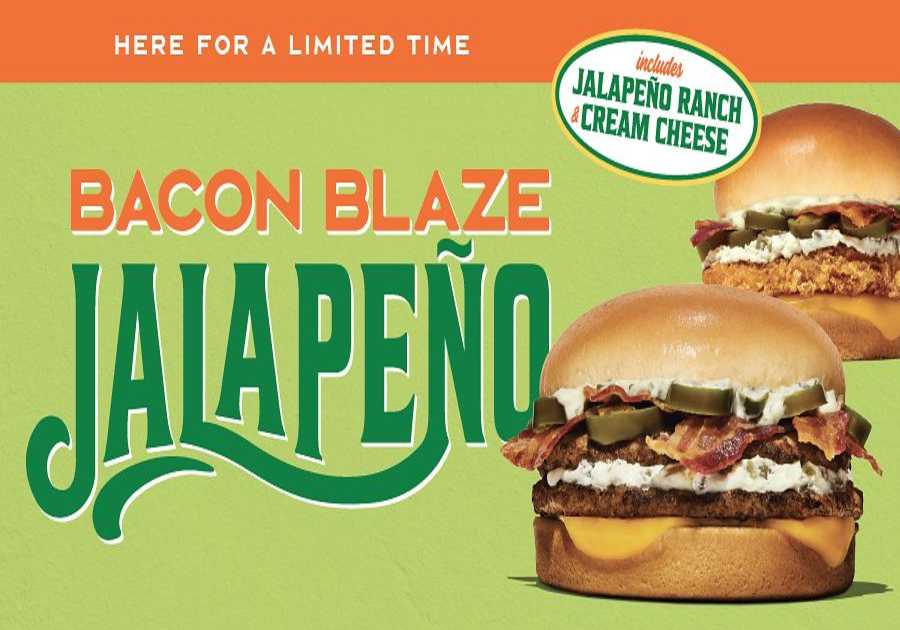
Once a customer is looking, the menu becomes the primary sales tool. Ninety three percent of consumers say detailed, appealing menu descriptions have influenced what they ordered on a delivery app in the past six months, and 60 percent say the menu and type of food is what drives their decision to book a table through a reservations app.
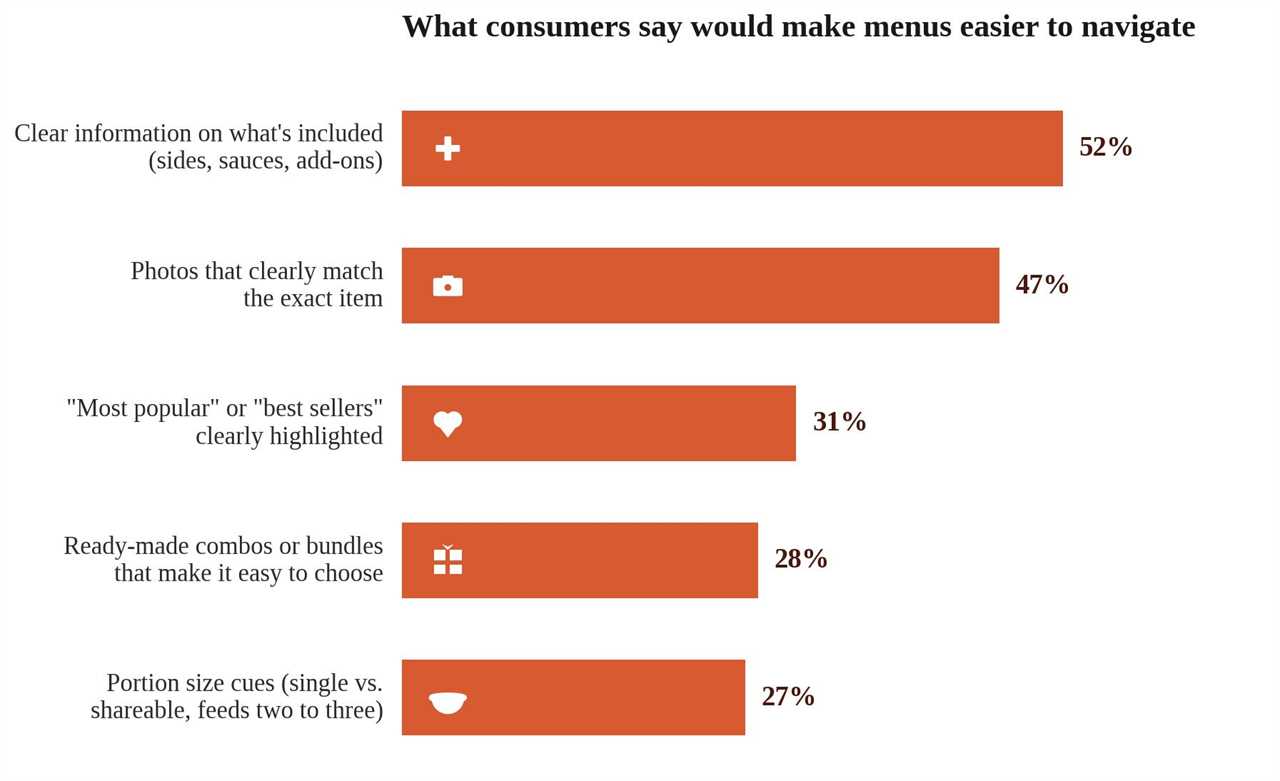
Asked what would make menus easier to navigate, consumers pointed to five specific fixes, cited by between 27 and 52 percent of respondents:
Photography follows closely, with 87 percent of consumers say they've chosen a delivery item because of a tempting photo or video, a figure that climbs to 90 percent among Gen Z and 95 percent among Millennials. Ninety one percent say a new menu item they tried had a photo attached at least some of the time, which the report frames as "visual reassurance" — what makes a diner willing to try something new.
Celebration vs. Convenience
When the moment calls for celebration or connection, diners choose to dine in — a pattern the data bears out clearly. For convenience, routine, and self-care, they choose delivery or pickup. Birthdays and date nights each pull 86 percent of the vote, comfortably ahead of holidays and family traditions at 75 percent, with family gatherings and travel trailing at 58 percent — a hierarchy that tracks fairly closely with how much occasion, rather than hunger, is doing the deciding.
Pickup runs on a different logic entirely. Its clearest peak isn't a special occasion at all but the casual weekend meal, at 46 percent, while the weekday staples — a quick bite, a post-work reset, treating yourself — sit in an even cluster around 26 percent apiece.
The puzzle pieces that complete the bigger picture.
Sixty two percent of consumers say a delivery order led them to dine in at the same restaurant at least once in the past six months. Seventy four percent say a dine-in visit later led them to order delivery from that same place. Customers who engage across both channels tend to be the most valuable: they order more often, visit more frequently, and stick around longer. Tools that can track and manage cross-channel loyalty make it easier for diners to move between delivery and in-person visits, turning one-off orders into lasting relationships. The biggest gaps sit between transactions, channels, and customer data. Disconnected systems make it harder to track repeat behavior, cross-channel activity, and what's actually selling. Prioritize syncing what matters most.
When running promotions, operators mainly aim to drive repeat visits (38 percent) and boost spend per visit or order (36 percent) — but there's a real opportunity to stand out through more personalized marketing that makes customers feel valued. Personalization doesn't require hours of manual campaign work or extra marketing headcount. With a centralized CRM and automated marketing, operators can target customized offers based on customer behavior across channels.."We use a huge range of tags — VIP, hot reservation, Miami Spice," says Gideon Amelkin, Marketing Director at Groot Hospitality. "Every time we run a ticketed event or use an event widget, we create a new tag that links directly to guest profiles in the database. We even auto-tag DoorDash customers. It keeps everything organized and lets us deliver more personalized service and marketing."
"We use a huge range of tags — VIP, hot reservation, Miami Spice. Every time we run a ticketed event or use an event widget, we create a new tag that links directly to guest profiles in the database – says Gideon Amelkin, Marketing Director at Groot Hospitality.
Ultimately, the guest journey isn't linear — it's a loop. Diners discover a restaurant through search or a delivery app, choose to order or book based on what they see, experience the meal across whatever channel they picked, and return because a CRM remembered who they are and what they like. The restaurants that grow fastest aren't necessarily the ones excelling at any single stage, but the ones connecting all four — turning discovery into a relationship, not just a transaction, a belief more than eighty percent of operators share when it comes to their own profitability.